

Key Concepts
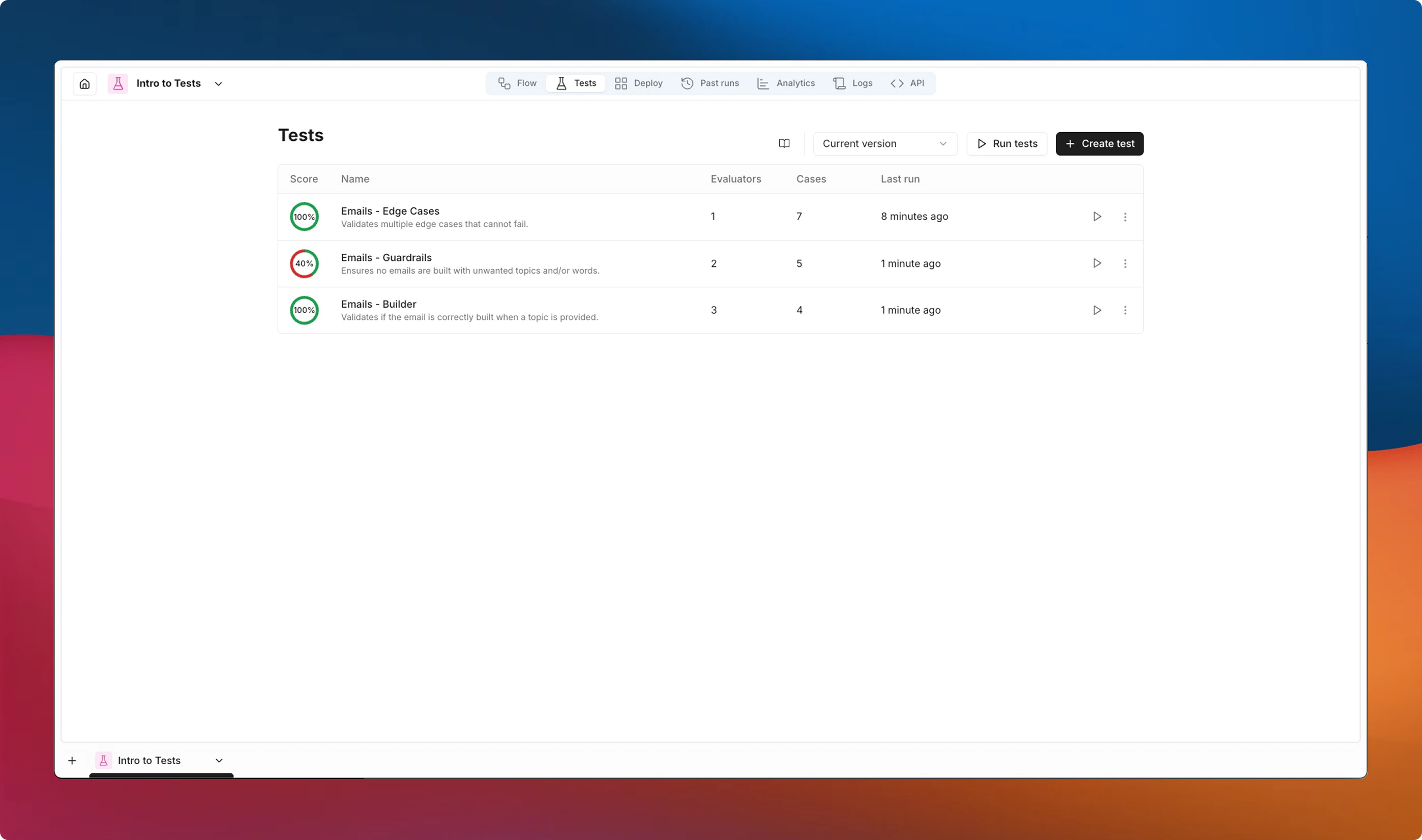
Tests
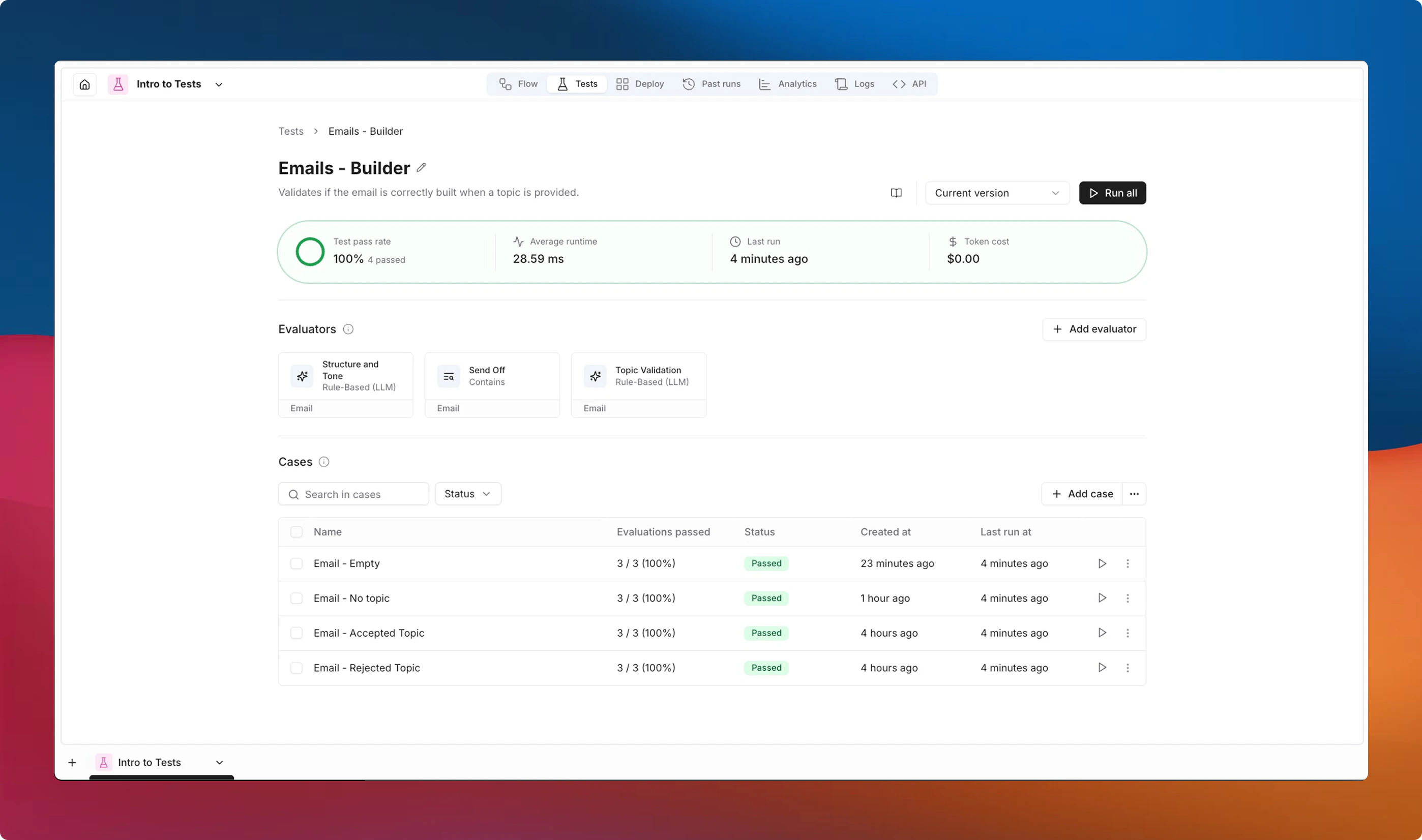
A test is a named collection of evaluators and cases scoped to a single flow. Each test acts as an independent group that can be run on its own or together with other tests. A test contains:- Evaluators — rules or criteria that score each case’s output.
- Cases — specific input scenarios to run against your flow.
Evaluators
Evaluators are the scoring functions applied to each case’s output. They determine whether the output is correct by returning a pass/fail result.Only text outputs can be evaluated at this time. File outputs, images, and other non-text types are not supported by evaluators.
- Deterministic evaluators — rule-based checks like regex matching, string comparison, and JSON validation. Fast, predictable, and free.
- AI evaluators — LLM-powered assessments that score outputs against natural language rules or multi-criteria rubrics. Flexible but consume model tokens.
Cases
A case defines the inputs your flow will receive during an evaluation run. Cases can optionally include Evaluator Values — parameters that an evaluator needs to perform its check. You can override some of these values per case when a specific scenario requires different criteria. You can create cases manually or generate them from a previous successful run. See Cases for details on creating and managing test cases.How It Works
- Create a test for your flow.
- Add evaluators that define what “correct” means — string matches, JSON validation, LLM-based scoring, or any combination.
- Add cases with the inputs you want to verify.
- Run the test against the current version or a specific version of your flow.
- Review results — each case shows a pass/fail status per evaluator, an overall score, and detailed feedback.
Score Ring
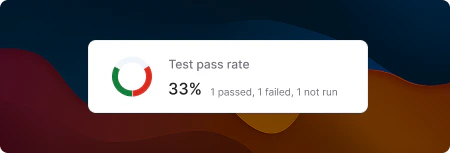
Each test displays a score ring summarizing the latest results at a glance:- Green — passed cases
- Red — failed cases (evaluator assertions did not pass)
- Gray — cases not yet run, or cases that encountered an execution error
Statuses
Cases can have the following statuses:Next Steps
- Evaluators — explore all available evaluator types and their configuration.
- Cases — learn how to create and manage test cases.
- Running Tests — understand how to run evaluations and interpret results.